
MERCURY FILLINGS REMOVAL
Remove harmful and toxic mercury fillings safely.
A dental procedure that uses all the recommended safety protocols to remove mercury fillings or amalgam. Replaces them with normal dental fillings. Best for patients who have had mercury fillings done previously and are worried about the impact of leaking or damaged mercury fillings.
BOOKING AN APPOINTMENT
Phone: +65 6333 4456 (24 hour emergency hotline)
Email: patient-care@elitedental.com.sg
Whatsapp: +65 9788 9407 (replies during working hours)

What are Mercury Fillings?
Properly known as Dental Amalgam, it is the most widely used dental filling material for the past 150 years. It is strong, long-lasting, and is the least expensive type of filling material. It is a metal alloy (a mixture of tin, copper and zinc) dissolved in liquid mercury.
Why is mercury used in dental amalgam?
Mercury is the solvent that allows different metal particles to mix together. It is the only metal that is in a liquid state at room temperature. When first mixed, the liquid mercury allows amalgam to be pliable enough to be packed into the cavity. Once the amalgam fully hardens, it can withstand biting and chewing forces.

Are dental amalgams safe?
Scientific research has shown that amalgam fillings release low levels of mercury vapour over time. Brushing your teeth and chewing causes even more mercury vapour to be released. This mercury vapour is then inhaled and absorbed through the lungs.
Amalgam also tends to corrode within the tooth over time, producing heavy metal-rich corrosion byproducts that inhibit the growth of bacteria.
According to the US Food and Drug Administration (FDA) in 2018, there is no clear causal link between dental amalgam use and health problems in the general population.
Within the dental fraternity, discontinuing the use of dental amalgam completely is still controversial. The World Health Organization (WHO) and World Dental Federation (FDI) has suggested phasing out amalgam use gradually in accordance with the Minamata Convention.
Replacement of dental amalgams is done when severe damage, cracks, surface corrosion or marginal leakage with recurrent decay is present.
If you have been diagnosed with a metal allergy, contact sensitivity or lichenoid reaction inside your mouth to metals, keeping your amalgams may also be an issue. Elite Dental works closely with holistic medical physicians who can run tests and bloodwork for such concerns.
Elite Dental Group is a mercury-free practice.
How is biological removal of mercury fillings at Elite Dental Group done?
Mercury vapour is released during the placement and removal of amalgam fillings. It is for this reason that amalgam removal is potentially harmful to the patient, the dentist, dental staff, and the environment.
At Elite Dental, your safety is our top priority. That is why we practice biological removal of amalgam, to minimize exposure to excessive amounts of mercury vapour.
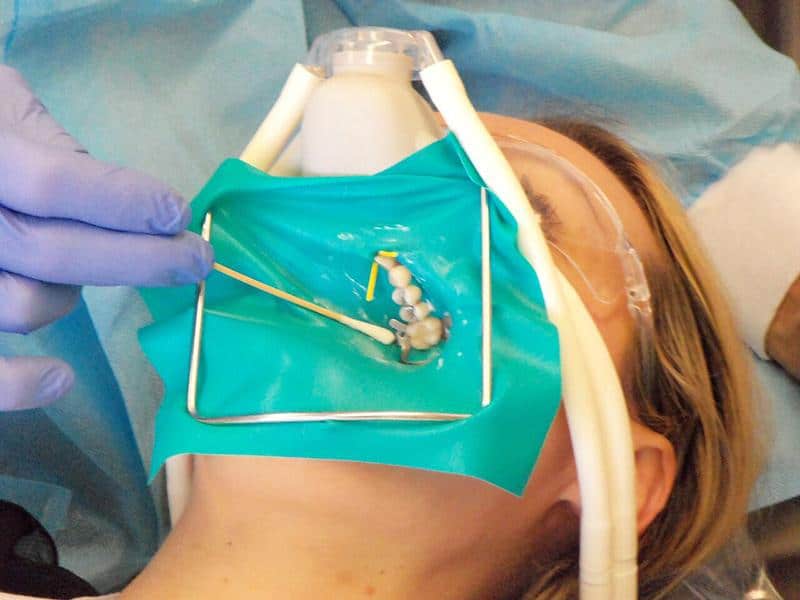
Step 1: Safety measures (Visit 1)
Everyone involved (dentist, nurses and patient) will be wearing protective gowns and covers. A well-sealed nose piece to supply you with oxygen ensures that you will not inhale mercury vapour during the procedure.
Next, a well-sealed rubber dam will be placed over the teeth to be treated. This ensures that amalgam dust and mercury vapour cannot be inhaled through the mouth or swallowed.
Step 2: Removing the dental amalgam (Visit 1)
After the isolation and numbing of your teeth, the amalgam fillings are then removed. A high volume suction removes the debris and vapour generated. Once the amalgam is removed, your teeth are rinsed with water, and then rinsed with an antiseptic solution.
If you are going to replace the amalgam with an inlay or an onlay, a mould of the tooth is then made and transferred to the dental laboratory. A temporary filling will then be placed to protect your tooth in the meantime.
If you have chosen to replace the amalgam with a direct composite resin (plastic) filling, this will be completed on the same day.

Step 3: Fitting of ceramic inlay or onlay (Visit 2)
Once your inlay/onlay is ready, the temporary filling will then be removed. The inlay/onlay is then permanently bonded to your tooth with a dental adhesive. Your bite will then be checked to ensure that it is balanced before we give the new inlay/onlay a final polish.
Frequently Asked Questions
Can’t find an answer? Call us at (65) 6333 4456 or email patient-care@elitedental.com.sg
Are dental amalgams safe?
In the long term, dental amalgams can cause silent systemic and oral health problems.
Research in the scientific community indicates that amalgam fillings gradually emit low levels of mercury vapor. Everyday activities like tooth brushing and chewing further contribute to the release of mercury vapor, which is then inhaled and absorbed through the lungs.
Moreover, amalgam has a tendency to corrode within the tooth as time progresses, generating corrosion byproducts rich in heavy metals. These byproducts inhibit bacterial growth within the tooth.
According to the US Food and Drug Administration (FDA) in 2018, there is no clear causal link between dental amalgam use and health problems in the general population.
Within the dental fraternity, discontinuing the use of dental amalgam completely is still controversial. The World Health Organization (WHO) and World Dental Federation (FDI) has suggested phasing out amalgam use gradually in accordance with the Minamata Convention.
Replacement of dental amalgams is done when severe damage, cracks, surface corrosion or marginal leakage with recurrent decay is present.
If you have been diagnosed with a metal allergy, contact sensitivity or lichenoid reaction inside your mouth to metals, keeping your amalgams may also be an issue.
Elite Dental Group is a mercury-free dental practice that works closely with holistic medical physicians who can run tests and bloodwork for such concerns. We also use mercury-free dental fillings and materials for our dental treatments.
How many mercury fillings can I remove at one go?
The number of mercury fillings that can be removed at one go depends on your current health, the size and location of your fillings.
What is the difference between mercury fillings removal and mercury fillings replacement?
Mercury fillings removal and replacement differ in their end goals. Removal involves taking out the amalgam fillings without necessarily putting in new fillings. This might be done if the tooth has healed or if no filling is needed.
Replacement, on the other hand, involves removing the mercury fillings and immediately replacing them with alternative materials like composite resin or ceramic. Replacement ensures the tooth remains protected and functional.
The choice between removal and replacement depends on the condition of the tooth and your personal preferences. Both procedures aim to eliminate potential mercury exposure, but replacement also maintains the structural integrity and appearance of the tooth.
What are the potential risks of mercury filling removal?
Potential risks of mercury filling removal include temporary increased mercury exposure during the procedure, tooth sensitivity, and potential damage to the tooth structure.
There is a small risk of mercury vapor release during removal, which is why Elite Dental Group invests in training our staff on the proper safety protocols.
Some patients may experience post-procedure pain or sensitivity. In rare cases, removal might weaken the tooth, potentially leading to fractures or the need for more extensive dental work.
There is also a slight risk of allergic reaction to new filling materials if replacement is done. However, when performed by an experienced dentist following proper safety protocols, these risks are minimized.
What are the potential side effects during removal?
During mercury filling removal, potential side effects may include a metallic taste in the mouth, temporarily increased salivation, and mild discomfort or pain at the site of removal.
Some patients might experience short-term sensitivity to hot and cold temperatures. There is a possibility of inhaling small amounts of mercury vapor, which is why proper safety measures are crucial.
Rarely, patients might feel dizzy or nauseous, likely due to anxiety or the procedure itself. Most side effects are temporary and subside quickly. If you experience severe pain, prolonged bleeding, or any unusual symptoms, please contact your dentist immediately.
Is it worth removing mercury fillings?
The decision to remove mercury fillings is personal and depends on various factors. If your fillings are in good condition and you are not experiencing any issues, removal might not be necessary.
However, if you are concerned about potential mercury exposure, have cracked or worn fillings, or are experiencing symptoms you believe are related to your fillings, removal could be beneficial.
Removal can also be worthwhile for aesthetic reasons, as alternative materials like composite resin match your natural tooth color.
Do I really need to remove my dental amalgams?
The necessity of removing dental amalgams depends on your individual situation. If your amalgam fillings are intact and you are not experiencing any issues, immediate removal may not be necessary.
However, removal might be recommended if the fillings are worn, cracked, or causing symptoms. Some people choose removal due to concerns about potential long-term mercury exposure, even if the fillings appear fine. Others may opt for removal for aesthetic reasons.
The decision should be made in consultation with a dentist, considering factors like the condition of your fillings, your overall health, and your personal preferences regarding potential mercury exposure.
What are the benefits of choosing a mercury-safe dentist?
Choosing a mercury-safe dentist like our dentists at Elite Dental Group offers several benefits.
We are specially trained in safe mercury removal techniques, minimizing your exposure to mercury vapor during the procedure. We also use specific equipment like high-volume air filtration systems and provide protective barriers to prevent inhalation or ingestion of mercury particles.
Mercury-safe dentists often take a holistic approach to dental health, considering how oral health impacts overall wellbeing. We are knowledgeable about alternative filling materials and can guide you in choosing the best option for your needs.
Our dentists prioritize your well-being and are more aware of potential mercury sensitivities and can provide appropriate pre- and post-procedure care.
Are there any aftercare and dietary instructions I should follow after removal?
After mercury filling removal, you should generally avoid eating for a few hours and then stick to soft foods for the rest of the day. Avoid very hot or cold foods and beverages for a few days to prevent sensitivity.
Gentle salt water rinses can help with healing. Avoid smoking and alcohol for at least 24 hours. Some dentists recommend certain supplements or detox protocols to support your body in eliminating any absorbed mercury, but these should only be followed under professional guidance.
If you experience prolonged pain, swelling, or unusual symptoms, contact your dentist promptly.
Can I use insurance for mercury fillings removal treatment?
You might be able to use insurance for your mercury fillings removal treatment. However, please check in with your preferred dental provider to confirm whether your insurance plan covers mercury fillings removal treatment.
Can I use Medisave for mercury fillings removal treatment?
It will not be possible to use Medisave for your mercury fillings removal treatment. Medisave is only able to be used for dental surgical procedures such as dental implants surgery or wisdom tooth surgery.
Can I eat after my mercury fillings are removed?
Yes it is possible to eat after your mercury fillings are removed. There are, however, a few tips that you should try to follow post-removal.
It is generally recommended to wait a few hours before eating. When you do eat, stick to soft foods and avoid anything too hot or cold for the first day. This allows time for any local anesthesia to wear off and helps prevent damage to the new filling or sensitive tooth.
Avoid chewing directly on the treated tooth for at least 24 hours. It is also best to avoid sticky, hard, or sugary foods for a few days. As always, try to follow the specific instructions of your dentist, as they may vary based on your individual case and the type of replacement filling used.