
WISDOM TOOTH EXTRACTION
Remove wisdom tooth pain or discomfort without discomfort. Can be either a simple or surgical extraction to remove 1 to 4 wisdom teeth. Simple procedures are covered with CHAS, while surgical procedures are covered with Medisave.
BOOKING AN APPOINTMENT
Phone: +65 6333 4456 (24 hour emergency hotline)
Email: patient-care@elitedental.com.sg
Whatsapp: +65 9788 9407 (replies during working hours)
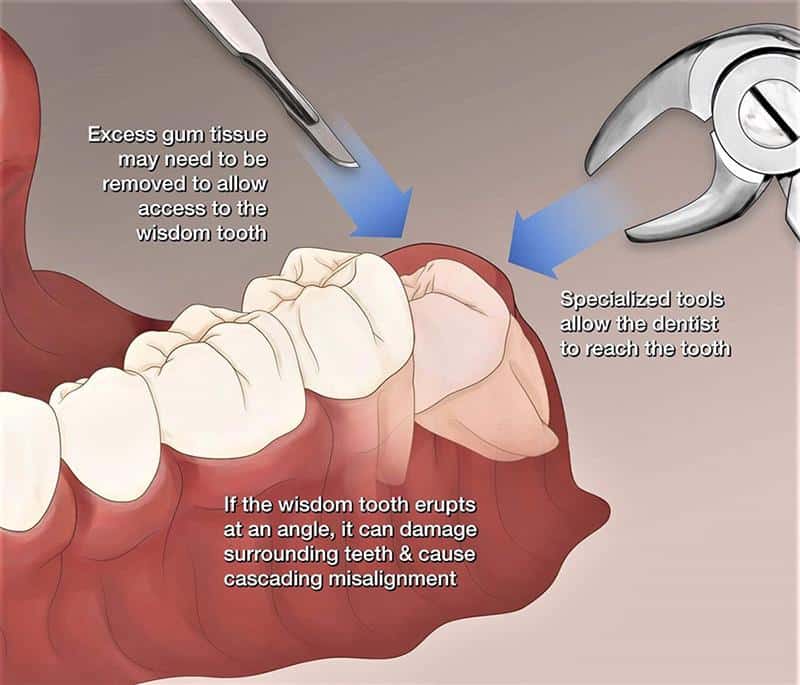
What is a wisdom tooth?
A wisdom tooth, also known as the third molar, is the last tooth in the arch found at the back of the mouth. It generally erupts between the ages of 17 and 25.
You may have 1-4 wisdom teeth or even none!
When must I remove my wisdom teeth?
About 85 per cent of wisdom teeth require removal (according to the American Association of Oral and Maxillofacial Surgeons) because of impaction.
Occasionally, wisdom teeth may also be indicated for removal as part of an orthodontic treatment plan.
An impacted wisdom tooth occurs when the tooth does not completely erupt into the mouth, leaving it partially-covered by gum tissue. A pocket tends to form in between the loose gum and the tooth. This pocket can trap food and bacteria if it is not cleaned out regularly and this can lead to an infection of the gum that is partially covering the wisdom tooth (pericoronitis). The adjacent tooth may also start to decay because of the food accumulation caused by the impacted wisdom tooth. Pressure from the impacted tooth on the adjacent tooth’s roots may cause resorption (dissolving of the root). For these reasons, it maybe recommended that you remove your impacted wisdom teeth, even if they are not causing discomfort.
We may advise you to remove a non-impacted wisdom tooth if it is severely decayed, causing repeated frictional ulcers in the cheek or if it has drifted out of position to impinge on the gum of the opposing arch.
An infected and impacted wisdom tooth may cause the following symptoms:
- Pain, swollen/tender/bleeding gums with pus discharge
- Swelling in the jaw area
- Bad breath
- Unpleasant taste in the mouth near the affected teeth
- Headache/jaw ache
- Difficulty opening the mouth
- Difficulty swallowing
- Swollen lymph nodes along the jawline and neck
- Fever
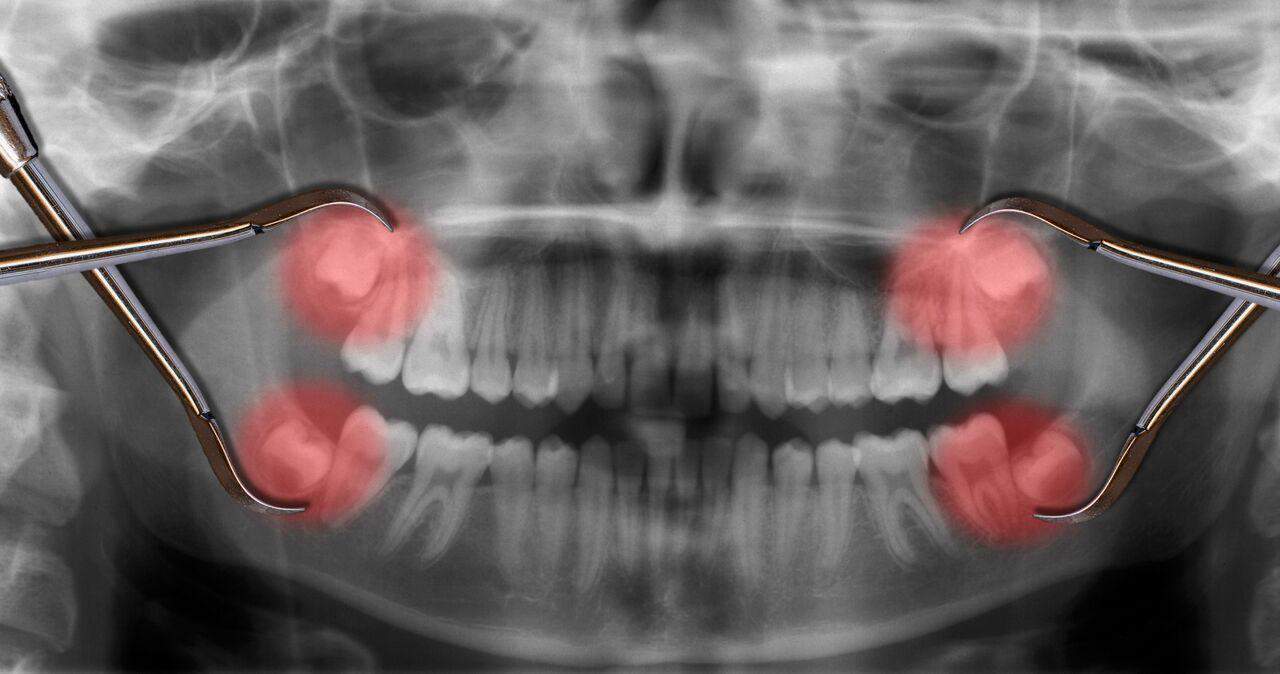

Wisdom Tooth Surgery at Elite Dental
Step 1: Consultation
Your wisdom teeth will be assessed as part of your new patient examination or as part of active maintenance visits.
Radiographic assessment is a routine part of the pre-surgical planning. We may order a 3D CBCT Scan that will provide more information about your wisdom tooth and its relationship with surrounding teeth and other structures (nerves, sinuses) within the bone.
Step 2: Pre-surgical preparation
A few days before, a thorough scaling and polishing is done. An oral probiotic is also given to boost the numbers of beneficial bacteria in the saliva so that healing is smooth.
Step 3: Removing the wisdom tooth
The wisdom tooth is always removed under a local anaesthetic. You may also choose to be sedated for the entire procedure to ensure an anxiety free procedure.
Your tooth may need to be sectioned to allow for a gentle removal with minimal trauma to the surrounding tissues. Stitches will then be placed in the gums afterward. These will be removed after a few days when healing is complete. A gauze pack will be placed over the wound to encourage blood clotting and to stop bleeding.
It is important to note that if you are Singaporean or a Singapore PR, we may help you make a claim against your Medisave account to pay for your wisdom tooth surgery either partially or in full.
General advice for recovery from Wisdom Tooth Surgery
- Have plenty of cold food (ice cream, milkshakes) and iced drinks on the day of surgery. Some patients like to hold ice cubes in the mouth to minimise pain and swelling.
- Have soft foods after surgery, for example, congee, yoghurt, soft boiled eggs
- Apply lip balm to keep your lips moist
- Rinse gently with salt water after meals. Hold the salt water in your mouth for about 5 minutes before spitting out.
- Start all rinses 24 hours after surgery, not sooner.
- DO NOT SMOKE!! This will interfere with proper wound healing.
- Avoid vigorous exercise.
- Remember to take your medication – set a timed alarm on your phone if necessary.
Frequently Asked Questions
Can’t find an answer? Call us at (65) 6333 4456 or email patient-care@elitedental.com.sg
Do I need a wisdom tooth extraction?
You do not always need a wisdom tooth extraction. It is not always a necessary procedure to undergo. Most dentists recommend wisdom tooth removal for the following reasons:
- Better oral hygiene
- Reduced risk of potential dental problems
- Reduced risk of pain or infections from wisdom teeth.
In some cases, some patients do not ever undertake a wisdom tooth extraction procedure. However, if you wish to mitigate some of the problems you might face in the future, or if it has started to cause you problems like tooth sensitivity, pain or discomfort, you might require a wisdom tooth extraction.
You do not always need a wisdom tooth extraction. It is not always a necessary procedure to undergo. Most dentists recommend wisdom tooth removal for the following reasons:
- Better oral hygiene
- Reduced risk of potential dental problems
- Reduced risk of pain or infections from wisdom teeth.
In some cases, some patients do not ever undertake a wisdom tooth extraction procedure. However, if you wish to mitigate some of the problems you might face in the future, or if it has started to cause you problems like tooth sensitivity, pain or discomfort, you might require a wisdom tooth extraction.
Am I suitable for wisdom tooth extraction?
You are suitable for wisdom tooth extraction if you are currently experiencing one or a combination of the following symptoms:
- Discomfort from your wisdom tooth area
- Redness or swelling of the gums from wisdom tooth area
- Gums bleeding from wisdom tooth area
- Swollen jaw
- Difficulty in opening and closing your mouth
- Tooth sensitivity from hot and cold foods or drinks
- Inability to brush or floss your teeth properly
How painful is wisdom tooth extraction?
A wisdom tooth extraction is not meant to be painful. It should not be painful as you will be given local anesthetic or sedation options during your wisdom tooth extraction procedure. This completely numbs your pain while your dentist is extracting your wisdom tooth.
If one of the reasons stopping you from proceeding with wisdom tooth extraction is pain, there is nothing to fear.
What is the difference between a wisdom tooth extraction and a wisdom tooth surgery?
A wisdom tooth extraction is a dental procedure that is done to remove your wisdom teeth. This can be done through a simple extraction or a surgical extraction.
Wisdom tooth surgery, on the other hand, is a surgical dental procedure that is done to remove a wisdom tooth that might not be entirely visible or that is impacted.
The wisdom tooth might be buried or concealed under your gum. To remove a partially hidden wisdom tooth requires surgery to reveal the tooth under the gums then sectioning the wisdom tooth into multiple parts before removing it carefully.
Can I leave my wisdom teeth in?
Yes it is entirely possible to leave your wisdom teeth in. Many patients choose to retain their wisdom teeth because it does not cause them any pain or discomfort.
If you do not feel any lingering discomfort or pain from your wisdom teeth, there is no need to rush to a dental clinic to have your wisdom teeth removed. However, if you would like to lean on the side of caution, you can have your wisdom teeth removed.
How long is the wisdom tooth extraction procedure going to last?
Each wisdom tooth extraction procedure takes about 30 to 60 minutes depending on whether you are undergoing a simple wisdom tooth extraction or a surgical one.
There are certain wisdom teeth extraction cases that might be slightly more complicated (e.g. besides a nerve or close to your sinuses) that might require a slightly longer duration.
What are the risks of wisdom tooth extraction?
Wisdom tooth extraction carries some risks, including dry socket, infection, nerve damage, and sinus complications. Dry socket can cause persistent pain, while infection may lead to swelling and fever. Nerve damage, though rare, can result in numbness or altered sensation in the lip, tongue, or chin. Sinus issues may occur with upper wisdom tooth removal.
How long will post-surgical wisdom teeth extraction pain last?
Post-surgical pain from wisdom teeth extraction typically lasts 3-7 days.
The first 24-72 hours are usually the most uncomfortable, with pain gradually subsiding thereafter. However, individual experiences can vary, and some may feel discomfort for up to two weeks.
Your dentist will typically issue you painkillers to cope with the pain that follows after the local anesthetic or sedation has subsided.
What should I look out for post-wisdom tooth extraction?
After wisdom tooth extraction, you should watch for signs of complications. These complications can include excessive bleeding, severe pain not relieved by prescribed medication, fever, or difficulty swallowing.
You should also be on alert for symptoms of dry socket, such as intense pain 3-4 days after surgery or a foul taste in your mouth. Swelling is normal but should start to decrease after a few days. If you notice any unusual or worsening symptoms, you should contact your dentist for advice.
Can I go about with my daily activities after wisdom tooth extraction?
Yes it is possible to go about your daily activities after wisdom tooth extraction. There will be minimal impact. However, you might want to hold off on strenuous activities such as heading for a workout at the gym or heavy lifting to avoid complications. If your job requires you to do physical activities, you might want to lay off these activities for at least one week.
Every individual has different healing times. In some cases, patients find that they are able to return to work after 2 or 3 days post-wisdom teeth removal.