
Guided Biofilm Therapy
Transform your smile with natural-looking perfection.
Guided Biofilm Therapy (GBT) Explained
Guided Biofilm Therapy is a gentle and non-invasive professional biofilm removal and teeth cleaning process that incorporates patient education with guided dental cleaning.
The treatment uses pressurised air and water combined with a fine cleaning powder to clean teeth and gums. This approach is what differentiates it from traditional cleaning methods like scaling and polishing (SAP).
The professional teeth cleaning treatment removes plaque, tartar and bacteria from tooth surfaces, gum pockets and gums. This protects your teeth and gums from decay and gum disease.
If you are looking to get your teeth professionally cleaned, remove stains from the surface of your teeth or prevent further oral health problems, GBT can be a comprehensive way to preserve your oral health.
At Elite Dental Group, we use GBT treatment as our primary way of cleaning your teeth and providing periodontal care. Guided Biofilm Therapy is also used for routine active maintenance work.
“Guided Biofilm Therapy can make teeth cleaning more fun and rewarding. Patients who visit us for GBT often tell us that they are able to sleep through the procedure and wake up with fresher teeth.”
Book an appointment for guided biofilm therapy.
Guided Biofilm Therapy (GBT) Benefits
The benefits of heading for GBT are:
- Minimally invasive dental cleaning
- Gentle on the gums and teeth
- Quiet cleaning with no high-pitched sounds or vibrations
- Great for sensitive teeth that are prone to pain
- Able to remove all plaque and tartar
- Able to remove most stains from teeth
- Suitable for patients of all ages – including children
- Suitable for patients who have dental implants, braces or fillings
- Does not cause microcracks that might lead to development of dental caries
Here are some of the key advantages of choosing GBT:
Effective Biofilm Removal:
GBT utilizes air polishing, to remove dental biofilm (plaque) from both supragingival and subgingival areas. This helps prevent the development of cavities, gum disease, and other oral health issues.
Minimally Invasive:
GBT employs minimally invasive techniques, reducing the use of traditional dental instruments. This may be preferred by individuals who feel uneasy during dental procedures or visits.
Reduced Discomfort:
Air polishing for biofilm removal is generally less abrasive than some traditional methods, which some patients with sensitive teeth or gums may find more tolerable.
Precision and Accuracy:
Guided Biofilm Therapy is used to remove biofilm from specific areas identified during examination. This targeted approach helps maintain healthy tooth structure while addressing areas where biofilm is present.
Enhanced Patient Comfort:
GBT can be carried out with options such as local anaesthesia or sedation if required, which may help some patients feel more at ease during the procedure.
Supports Comprehensive Oral Health:
By addressing biofilm both above and below the gumline, GBT supports comprehensive oral health. This is crucial for preventing conditions such as periodontal disease and maintaining a healthy foundation for teeth and gums.
Personalized to Your Treatment Plans:
Dental professionals can tailor Guided Biofilm Therapy to meet the individual needs of patients. This customization ensures that the treatment aligns with specific oral health goals and concerns.
Increased Time Efficiency:
GBT procedures can be completed in a relatively short time while maintaining thoroughness. This can be convenient for patients with busy schedules.
Prevents Further Oral Health Issues:
GBT is a preventive dental approach, aiming to stop the progression of oral health issues before they become more severe. Regular GBT sessions can contribute to long-term oral health maintenance.
Patient Education:
During GBT sessions, dental professionals can educate patients about proper oral hygiene practices, including brushing and flossing techniques. This empowers patients to take an active role in maintaining their oral health. Patients are also able to objectively tell if their dentist has done a thorough job with the cleaning.
Types of Dental Cleaning
- Dental Prophylaxis (Routine traditional Scaling and Polishing)
- Deep Scaling and Root Planing ( sometimes done under local anaesthesia)
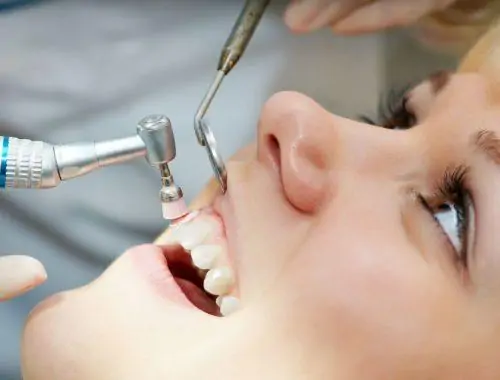
- Air Polishing ( prophy-jet)
- Ultrasonic Cleaning
- Gross Debridement
- Chemical Cleaning (Antimicrobial Treatment)
- Preventive Cleaning for Children with Fluoride Application
- Guided Biofilm Therapy
Guided Biofilm Therapy (GBT) at Elite Dental
If you are thinking of maintaining your dental hygiene and gum health with GBT, the following patient journey will give you a good overview of what happens during your appointment.
The GBT treatment has 8-steps.
The typical Guided Biofilm Therapy (GBT) patient journey can be explained with a simple 8-step flowchart:
| Assessment | Your dentist will perform an oral cancer screening and document your mouth with detailed photos and periodic X-rays. |
| Disclose | A harmless purple-blue dye which physically stains plaque (soft bacterial deposits) is painted onto the surfaces of the teeth. Without the dye, early plaque is transparent or tooth-coloured, making it difficult to see.dye produces different colors that correspond to areas of old plaque – which can be high-risk for gum disease) and acidic (decay-causing) plaque. |
| Motivate | Plaque disclosure allows you to identify areas of the mouth that you might find difficult to clean well.Your dentist can provide coaching to ensure that you are on top of your brushing and flossing game.The dye helps both your dentist and yourself to ensure that complete plaque removal has occurred after Guided Biofilm Therapy (GBT).Areas with thick plaque are at increased risk of decay and gum disease. Your dentist will use this to make a health risk assessment. Photos of your teeth will be taken before cleaning so that improvements in your oral hygiene can be tracked. Many parents love this particular feature. |
| Airflow | Airflow simultaneously removes plaque and surface stains. The Airflow handpiece uses a stream of pressurized air, water and special-coated powder to clean your teeth. This means that there is no direct contact with your teeth or gums, reducing the risk of bleeding and sensitivity.Your dentist has a choice of 2 different powders, depending on the amount of cleaning required for your teeth. Through the use of Airflow, we no longer need to use ultrasonic or hand instruments to remove soft plaque (biofilm). You do not have to abrade your teeth with rough pumice. Airflow is the best choice for you if you:• Are an anxious patient;• Dislike having your teeth cleaned;• Have highly sensitive teeth;• Have dental implants;• Have orthodontic braces or brackets;• Prefer a gentler, more comfortable and effective cleaning experience. |
| PerioFlow | Specialized tips for subgingival (the area underneath the gum line) and implant cleaning are available for patients who require specialized cleaning. |
| Piezon PS | EMS Piezon ultrasonic tips have built-in smart vibration to ensure complete tartar removal without damaging the enamel or hurting the gums.Ultra-fine tips clean painlessly inside the gum margin. |
| Check | During the check, a post-treatment photo will be taken for you to view the difference before and after Guided Biofilm Therapy (GBT). |
| Recall | Maintain your perfectly cleaned teeth by scheduling your next appointment with us in 4 to 6 months, or subscribing to our Guided Biofilm Therapy Active Maintenance subscription that keeps your teeth healthy and clean on a lighter budget. In the meantime, work towards better oral hygiene with plaque disclosing tablets that you can use at home. |
Why was the disclosing agent applied to my teeth before GBT?
A disclosing agent is applied to the teeth to expose the biofilm (plaque) on the teeth. The purpose of GBT is to completely remove biofilm from your teeth.
If biofilm is made visible, it is removed much faster and more effectively. What you see is what is removed.
It also helps the dentist educate you on Oral Hygiene Instructions.
Guided Biofilm Therapy (GBT) Treatment Duration
A typical Guided Biofilm Therapy (GBT) appointment lasts about 20 – 45 minutes, depending on how long ago your last active maintenance appointment was as well as the condition of your oral and dental health.
At Elite Dental Group, certain severe causes may require more than one appointment of Guided Biofilm Therapy (GBT) to complete.
Guided Biofilm Therapy (GBT) Cost in Singapore
The cost of Guided Biofilm Therapy (GBT) starts from $195 for a routine 6 – 12 months cleaning with our oral health therapist and $220 for dental cleaning with our dentists. Children (below 12 years of age) are charged a subsidized rate of $150 – $180.
To view the breakdown of fees for Guided Biofilm Therapy (GBT), please view the following:
| Routine | Complex | Child | |
| Oral Health Therapist | $195 | $220 | $150 |
| Dentists | $220 | $250 | $180 |
Financing Guided Biofilm Therapy (GBT)
If you are thinking of heading to Elite Dental Group for your GBT treatment, there are a few ways you can finance your treatment.
| Major Banks | We accept interest-free installment payments from all major banks. |
| Buy Now Pay Later (BNPL) | We have existing collaborations with BNPL platforms like Atome, Pace, Hoolah and Grab PayLater to help reduce the upfront expenditure of your dental treatments. |
| Dental and Corporate Insurance | We are on multiple dental and corporate insurance panels to provide more accessible dental care to you. |
Why should I do Guided Biofilm Therapy with Elite Dental Group?
Elite Dental Group is one of the first certified and licensed providers for Guided Biofilm Therapy (GBT) treatment in Singapore. Completing Guided Biofilm Therapy (GBT) with us means your treatment will be carried out by dentists and oral health therapists trained in using this method.
Who will be doing Guided Biofilm Therapy (GBT) treatment for you at Elite Dental Group?
At Elite Dental Group, our clinicians use a range of dental technology tools to provide preventive dentistry services for various oral health needs.
Your GBT treatment will be rendered by our dental hygienist, Gong Shiyun.
To view a full list of our dental clinicians who are able to provide specific dental treatment care for you, please refer to the list below:
| Dentists | Dental implants to replace broken, loosened and dislodged teeth. Wisdom tooth surgery for removal of wisdom tooth. | Dr Gerald Tan |
|---|---|---|
| | Dental fillings for dental caries and root canal treatment to restore the health of your teeth. | Dr Thira Wong |
| Specialists | Oral Surgeons | Dr Lai Juen Bin |
| Dr Albert Lee |
Dental Surgeons
Dr Gerald Tan
- Dental implants to replace broken, loosened and dislodged teeth.
- Wisdom tooth surgery for removal of wisdom tooth.
Dr Thira Wong
- Dental fillings for dental caries and root canal treatment to restore the health of your teeth.
Dental Specialists & Oral Surgeons
Dr Lai Juen Bin & Dr Albert Lee
-
Topics
Frequently
Asked
Questions
Got questions? We’ve got answers! Check out our FAQ section for common inquiries and helpful information to guide you.
Are you a certified Guided Biofilm Therapy provider?
Yes, Elite Dental Group is a certified Guided Biofilm Therapy (GBT) provider.
This means that all our dentists and oral health therapists have trained in providing and administering Guided Biofilm Therapy (GBT) to patients.
We are also equipped with the right tools and equipment to render GBT treatment to our patients.
What is the difference between Guided Biofilm Therapy (GBT) and traditional Scaling and Polishing (SAP)?
Guided Biofilm Therapy (GBT) and traditional Scaling and Polishing (SAP) differ significantly in their approach to dental cleaning. GBT is a systematic, evidence-based approach that focuses on biofilm removal before any scaling is performed. It uses air polishing technology with fine powder to gently remove biofilm and stains, making calculus (tartar) visible and easier to remove.
SAP, on the other hand, typically involves manual or ultrasonic scaling to remove calculus, followed by polishing with an abrasive pumice. GBT is designed to be less abrasive to tooth surfaces and can be used to remove biofilm from various areas of the teeth, including those that may be harder to reach. It also allows for better visualization of the tooth surface during treatment, potentially leading to more thorough cleaning.
Why should I choose Guided Biofilm Therapy (GBT)?
Choosing Guided Biofilm Therapy (GBT) offers several advantages over traditional cleaning methods. GBT is designed to be a more comfortable experience for patients, often reducing sensitivity and discomfort during the cleaning process. It works to remove biofilm and stains even in hard-to-reach areas, leading to a more thorough clean.
GBT is designed to be less abrasive to tooth surfaces and soft tissues compared to traditional methods, helping to preserve tooth structure over time. It also allows for better visualization of the tooth surface during treatment, which can assist in targeted cleaning. Additionally, GBT can be particularly beneficial for patients with dental implants, orthodontic appliances, or sensitive teeth. Its systematic approach ensures consistent and comprehensive cleaning, potentially improving overall oral health outcomes.
Am I suitable for Guided Biofilm Therapy (GBT)?
Guided Biofilm Therapy (GBT) is suitable for everyone of all ages.
General Dental Maintenance
Guided Biofilm Therapy manages biofilm and prevents periodontal and peri-implant disease by helping control oral diseases.
Patients with Braces or Clear Aligners
Guided Biofilm Therapy (GBT) hinders the progression of gingival overgrowth, gingivitis and gum recession for patients with orthodontic appliances. It can help with early-detection and prevention of white spots and dental caries.
With GBT, the integrity of orthodontic appliances are maintained, thus minimizing the accumulation of biofilm.
Patients with Dental Implants
Guided Biofilm Therapy (GBT) is the only reliable and predictable dental maintenance solution for patients who have dental implants.
If you have dental implants, GBT can preserve and maintain your implants pre and post-treatment.
Is the treatment good for my teeth?
Guided Biofilm Therapy (GBT) is generally considered beneficial for your teeth. The treatment focuses on gentle yet thorough removal of biofilm and stains, which are primary contributors to dental issues like cavities and gum disease. By effectively eliminating these harmful substances, GBT helps maintain the health of your teeth and gums.
The air polishing technology used in GBT is less abrasive than traditional scaling methods, which helps preserve tooth enamel over time. This is particularly important for long-term dental health. Additionally, GBT allows for cleaning of hard-to-reach areas, ensuring a more comprehensive treatment. Regular GBT sessions can contribute to better oral hygiene, potentially reducing the risk of dental problems in the future.
Will GBT damage my teeth?
Guided Biofilm Therapy (GBT) is designed to be gentle on your teeth and is unlikely to cause damage when performed correctly by a trained professional. The air polishing technology used in GBT is less abrasive than traditional scaling methods, which helps preserve tooth enamel over time.
However, as with any dental procedure, it is important to have it performed by a qualified professional who can adjust the treatment to your specific needs. They will consider factors like the condition of your teeth and gums, any existing dental work, and your overall oral health. If you have concerns about potential damage, discuss them with your dental provider. They can explain the precautions taken during GBT to protect your teeth and address any specific worries you may have.
What methods does GBT use to stop tooth decay?
Guided Biofilm Therapy (GBT) employs several methods to help prevent tooth decay. Firstly, it uses air polishing technology to thoroughly remove biofilm (plaque) from all tooth surfaces, including hard-to-reach areas. This biofilm removal is crucial as plaque is the primary cause of tooth decay.
Secondly, GBT allows for better visualization of the tooth surface, enabling the dental professional to identify and address early signs of decay. The treatment can also include the application of fluoride, which strengthens tooth enamel and makes it more resistant to acid attacks from bacteria.
Lastly, GBT is often combined with patient education on proper oral hygiene techniques and dietary advice to prevent future decay. By providing a thorough clean, GBT plays a significant role in a comprehensive approach to stopping tooth decay.
How frequently should I go for GBT for optimal results?
You should return for Guided Biofilm Therapy (GBT) active maintenance every 4 to 6 months after your treatment.
To book a follow-up appointment, simply head to our patient experience specialists after your appointment to arrange for a follow-up date.
Regular dental maintenance prevents potential dental problems that might require costly treatments such as dental implants, root canal treatment or crowns.
Do I still need regular dental cleaning if I go for GBT?
Even if you undergo Guided Biofilm Therapy (GBT), regular maintenance dental cleanings are still important. GBT is not a substitute for ongoing dental care. The frequency of your cleanings will depend on your individual oral health needs, which your dentist will assess.
For many people, GBT can become their regular cleaning method, replacing traditional scaling and polishing. The intervals between these GBT sessions are typically similar to those for traditional cleanings – often every four to six months for individuals with good oral health.
However, some people may need more frequent cleanings, whether GBT or traditional, due to factors like gum disease, rapid tartar buildup, or other oral health issues. Your dentist will recommend the appropriate cleaning schedule based on your specific needs and the condition of your teeth and gums.
Is there a recommended interval between consecutive GBT sessions?
The recommended interval between consecutive Guided Biofilm Therapy (GBT) sessions can vary depending on your individual oral health needs. For many patients with good oral health, a typical average interval is every six months, similar to traditional dental cleaning schedules.
However, some individuals may require more frequent GBT sessions. This could be the case if you have a history of gum disease, tend to accumulate plaque and tartar quickly, or have other specific oral health concerns. In these cases, your dentist might recommend GBT every three or four months.
On the other hand, some people with excellent oral hygiene and low risk of dental problems might only need GBT once a year. Your dentist will assess your oral health status, consider your dental history, and take into account your home oral care routine to determine the most appropriate interval for your GBT sessions.
Can GBT be combined with other dental treatments or procedures?
Yes, Guided Biofilm Therapy (GBT) can be combined with other dental treatments or procedures. In fact, GBT is often used as part of a comprehensive dental care plan. It can be particularly beneficial when combined with treatments for gum disease, as the thorough biofilm removal can help improve gum health.
GBT can also be used in conjunction with cosmetic dental procedures. For example, it might be performed before teeth whitening to ensure the teeth are thoroughly clean, potentially enhancing the whitening results. For patients with dental implants or orthodontic appliances, GBT can be an effective way to clean around these structures.
Additionally, GBT can be part of a preventive care regimen, combined with fluoride treatments or dental sealants. Always discuss with your dentist how GBT fits into your overall dental treatment plan to ensure you are receiving the most comprehensive care possible.
Is GBT suitable for individuals with sensitive teeth or gums?
Guided Biofilm Therapy (GBT) is generally suitable for individuals with sensitive teeth or gums. The air polishing technology used in GBT is typically gentler on teeth and gums compared to manual or ultrasonic scaling.
For patients with sensitivity, the dental professional can adjust the settings of the air polishing device to ensure comfort. The use of warm water during the procedure can also help reduce sensitivity. Additionally, GBT doesn’t typically require scraping or prodding of teeth and gums, which can be a source of discomfort for those with sensitivity.
However, it is important to communicate any concerns about sensitivity to your dental provider before the treatment. They can tailor the GBT procedure to your specific needs and may recommend desensitizing treatments before or after the cleaning if necessary.
Is Airflow teeth cleaning painful?
As the name suggests, Airflow uses high pressure air to clean teeth, instead of traditional scaling and polishing tools and techniques. This makes Airflow teeth cleaning less painful and invasive to your teeth and gums than your usual scaling and polishing treatment.
Many patients find it more comfortable than traditional scaling and polishing methods. The air polishing technology uses a fine powder and water spray to gently remove biofilm and stains from teeth surfaces.
Some patients might experience a slight sensitivity to the air or water, particularly if they have exposed root surfaces or generally sensitive teeth. However, this sensitivity is usually mild and temporary. The dental professional can adjust the settings of the Airflow device to ensure your comfort during the procedure.
If you are concerned about potential discomfort, do not hesitate to discuss this with your dental provider before the treatment. They can explain the process in more detail and take steps to minimize any potential discomfort you might experience.
Is GBT suitable for individuals with gum disease?
For patients with gingivitis or early-stage periodontitis, GBT can help remove the biofilm that causes gum inflammation. The air polishing technology can access areas that are difficult to clean with traditional methods, including deep periodontal pockets.
In cases of more advanced gum disease, GBT might be used as part of a comprehensive treatment plan and combined with other periodontal treatments. However, the specific approach will depend on the severity of the gum disease and other individual factors. Your dentist or periodontist will assess your condition and determine if GBT is appropriate as part of your gum disease treatment.
Is it normal for my gums to bleed during teeth cleaning?
It is not considered normal for gums to bleed during teeth cleaning, including during Guided Biofilm Therapy (GBT). However, some bleeding can occur, especially if you have existing gum inflammation or if it has been a while since your last professional cleaning.
Bleeding gums are often a sign of gingivitis, an early stage of gum disease caused by the buildup of plaque and bacteria along the gum line. During the cleaning process, whether it’s GBT or traditional methods, this inflamed tissue may bleed slightly when disturbed.
GBT is generally gentler on the gums compared to traditional scaling methods, which may reduce the likelihood of bleeding during the procedure. If you are experiencing persistent gum bleeding during or after dental cleanings, it is important to discuss this with your dentist. Regular professional cleanings and good home oral hygiene can help improve gum health and reduce bleeding over time.
Can GBT help with bad breath or halitosis?
GBT may be included as part of a care plan to help manage bad breath or halitosis. Bad breath is often caused by the presence of bacteria in the mouth, particularly those that reside in the biofilm (plaque) on teeth and tongue surfaces.
GBT helps remove biofilm from all tooth surfaces, including hard-to-reach areas where bacteria can accumulate. By thoroughly eliminating this bacterial buildup, GBT can address one of the primary causes of bad breath.
Additionally, the air polishing technology used in GBT can help remove stains and food particles that might contribute to unpleasant odors. Some GBT protocols also include tongue cleaning, which can further help in managing halitosis.
However, it’s important to note that persistent bad breath can sometimes be a sign of other dental or health issues. If bad breath continues to be a concern after GBT and good home oral care, it’s advisable to consult with your dentist for a more comprehensive evaluation.
Is GBT suitable for individuals with dental implants?
Yes, Guided Biofilm Therapy (GBT) is not only suitable for individuals with dental implants, but it’s often recommended as a cleaning method for implant maintenance. The air polishing technology used in GBT is able to clean around dental implants without risking damage to the implant surface.
Traditional scaling instruments can potentially scratch the surface of dental implants, which could lead to bacterial accumulation and potential implant complications. GBT, on the other hand, uses fine powder particles in a controlled air-water spray, which helps remove biofilm and stains without causing abrasion to the implant surface.
GBT can clean not only the visible parts of the implant but also reach into the spaces around the implant where bacteria tend to accumulate. This helps maintain the health of the gums surrounding the impact, which is important for implant maintenance.
Can Guided Biofilm Therapy (GBT) be used for patients with dental restorations, such as crowns or dental veneers?
Yes, Guided Biofilm Therapy (GBT) can be safely used for patients with dental restorations such as crowns or veneers. In fact, GBT is often preferred for cleaning these types of restorations because it is gentler and less abrasive than traditional scaling methods.
The air polishing technology used in GBT effectively removes biofilm and stains from the surfaces of crowns and veneers without risking damage to these restorations. This is particularly important because maintaining the integrity and appearance of dental restorations is crucial for their longevity and aesthetic appeal.
GBT can clean around the margins of crowns and veneers, where bacteria often accumulate, helping to prevent decay and gum problems in these areas. However, it is important that the dental professional performing GBT is aware of all your dental restorations to ensure they are using the appropriate techniques and materials for your specific situation.
Is Guided Biofilm Therapy (GBT) safe for children?
Guided Biofilm Therapy (GBT) is generally safe for children and is often integrated into pediatric dental care. The gentle nature of the air polishing technology used in GBT makes it particularly suitable for young patients who may be anxious about dental treatments or have sensitive teeth.
For children, GBT can be less intimidating than traditional scaling methods as it does not involve scraping or prodding of the teeth. The procedure is typically quicker and more comfortable, which can help create positive associations with dental visits.
GBT helps remove biofilm and stains from teeth of children, including around orthodontic appliances if the child has braces. It can be particularly useful for cleaning the deep grooves in molars, which are often difficult to clean thoroughly with traditional methods.
However, the use of GBT in children should be based on their individual needs and dental health status. Your pediatric dentist can advise if GBT is appropriate for your child and at what age it might be introduced into their dental care routine.
Is there a specific age range where Guided Biofilm Therapy (GBT) should not be used?
Guided Biofilm Therapy (GBT) does not have a specific age range where it should not be used. It is generally considered suitable for patients of all ages, from children to older adults. However, the appropriateness of GBT is determined more by the oral health status and specific needs of an individual rather than age.
For very young children, the dentist might prefer traditional cleaning methods until the child is old enough to cooperate fully with the GBT procedure. This decision is made on a case-by-case basis.
In older adults, GBT can be particularly beneficial. It’s gentle on sensitive gums and can clean around dental work that’s common in older patients, such as bridges, implants, and dentures.
The key is that the dental professional should assess the individual needs of a patient, considering factors like oral health status, presence of dental restorations, and ability to tolerate the procedure. They can then determine if GBT is the most appropriate cleaning method, regardless of the age of the patient.
Are there any aftercare instructions I should follow after Guided Biofilm Therapy (GBT) treatment?
After a Guided Biofilm Therapy (GBT) treatment, there are typically a few aftercare instructions to follow:
- Avoid eating or drinking for about 30 minutes after the treatment, especially if a fluoride application was part of your GBT session.
- If you experience any sensitivity, it should be mild and temporary. You can use a sensitive toothpaste if needed.
- Continue your regular oral hygiene routine of brushing twice daily and flossing once a day. Your dental professional may demonstrate optimal brushing and flossing techniques tailored to your needs.
- If any special products were recommended during your GBT session, such as a specific mouthwash or toothpaste, incorporate these into your routine as advised.
- Maintain a balanced diet and limit sugary and acidic foods and drinks to help maintain the results of your GBT treatment.
- If you notice any unusual symptoms or have concerns following your GBT treatment, do not hesitate to contact us.
Remember, these are general guidelines. Your dental professional may provide more specific instructions based on your individual oral health needs and the particular details of your GBT session.
HOW CAN WE HELP?
Heading to a dental clinic can be a scary and almost overwhelming experience. If you have landed on our website, we would like to extend our warmest welcome to you and your family. There is nothing to fear!
Should you require further information about our costs of treatment, or are looking for recommendations for your needs, we invite you to a complimentary consultation with our dentists at a time of your convenience.
Let’s Book
An Appointment!
I want to keep my teeth strong and healthy.
The only dental newsletter that
keeps you filling good about your teeth.
I want to keep my teeth strong and healthy.