

Root Canal Treatment
Transform your smile with natural-looking perfection.
Root Canal Treatment Explained
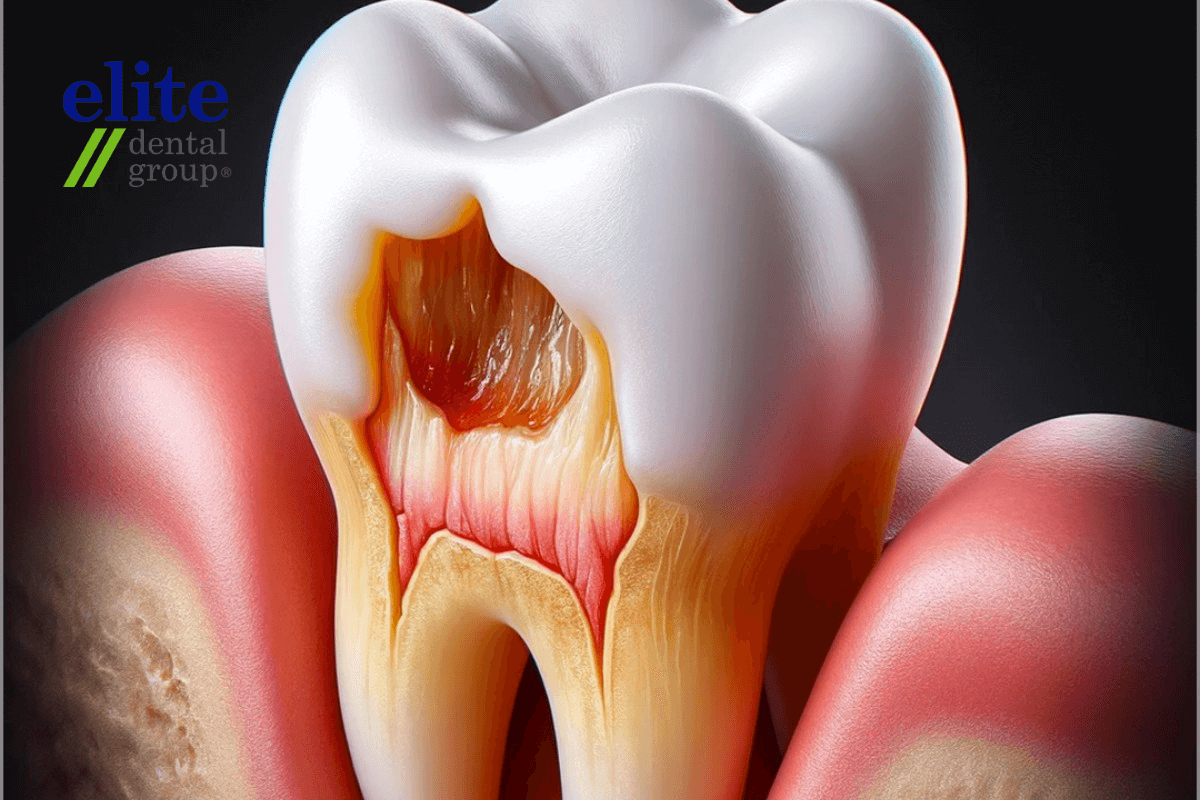
Root canal treatment or endodontic treatment is a procedure that is done to treat a painful or infected tooth that is badly decayed, cracked or infected . The treatment gets rid of bacteria from the infected root canal and protects the tooth from further infection. The procedure is an alternative to tooth extraction which removes the entire tooth from the socket.
You might need root canal treatment if you have structural tooth changes that can stem from a cracked tooth, dental trauma, genetics, tooth decay, a deep cavity that is close to the pulp of the tooth or dental filling issues.
Subsequent to root canal treatment, the strength and durability of the tooth are often restored with a dental crown or onlay.
Root canal treatment explained in greater detail
A root canal is a dental procedure that treats infections that affect the innermost layer of your tooth (the tooth pulp). The infected pulp is removed from the tooth and cleaned carefully before being disinfected. It is then filled and sealed with a sterile rubber filling to prevent further re-infections.
Quote:
“Root canal treatment can be a better and less invasive way of restoring your teeth. Patients usually visit us for tooth extraction thinking that they can no longer save their teeth. There is this misconception that extraction of painful or badly broken teeth and replacing them with dental implants are the gold standard of what should happen when teeth are decayed or cracked. That is not true. With root canal treatment, they get back the use of their original tooth or teeth without any surgery.”
Book an appointment for root canal treatment.
Root Canal Treatment Benefits
The benefits of heading for root canal treatment are:
- Restores tooth completely with a post root canal crown
- Preserves the natural tooth without extraction
- Relieves tooth pain and toothache
- Restores biting and chewing functions
- Stops spread of infection to surrounding teeth
- Maintains the overall appearance of teeth
Here are some of the key advantages of choosing root canal treatment:
Removes tooth pain and tooth infection completely
Root canal treatment treats a painful, infected, or damaged tooth by removing infected pulp, cleaning the inner chambers, and filling them with a biocompatible material.
This process helps eliminate the source of infection and removes pain coming from the infected tooth. After the procedure, a dental crown or onlay is typically placed over the treated tooth, providing additional reinforcement and protection and restoring its shape, strength and function.
This helps restore the tooth’s function so it can handle normal bite forces and be protected against further decay.
Preserves the longevity of natural teeth
By opting for a root canal instead of extraction, patients can preserve the longevity of their own natural teeth without needing extractions leading to dental implants, fixed bridges or dentures. This preservation is crucial for maintaining proper dental alignment and preventing potential complications associated with missing teeth.
Keeping the natural tooth in place helps distribute bite forces evenly across the jaw, reducing the risk of excessive wear on other teeth. Preserving the tooth root stimulates the surrounding bone, preventing bone loss that often occurs after tooth extraction. This approach supports long-term oral health and maintains the natural balance of the dental arch.
Relieves tooth pain and toothache
Root canal treatment helps relieve the severe pain often associated with deep tooth decay or infection.
By removing the infected pulp, which contains nerves and blood vessels, the procedure eliminates the source of pain. The cleaning and sealing process during the treatment also prevents further irritation of the surrounding tissues.
Many patients notice improvement shortly after the procedure and as healing progresses. This relief allows individuals to resume normal daily activities without the distraction of persistent tooth pain.
Restores biting and chewing functions
Following root canal treatment, patients regain the ability to bite and chew normally without pain or discomfort. The procedure removes the sensitive, infected tissue inside the tooth, eliminating the pain response when pressure is applied.
The subsequent restoration, usually a crown or onlay, restores the shape and strength of the tooth, allowing it to withstand the forces of biting and chewing. This functional restoration is crucial for proper nutrition and digestion, as it enables patients to enjoy a varied diet without restrictions. The treated tooth is made to integrate with the rest of the dentition, supporting overall function and mastication.
Stops spread of infection to surrounding teeth
Root canal treatment halts the progression of dental infection, preventing it from spreading to adjacent teeth and surrounding tissues.
By thoroughly cleaning and disinfecting the interior of the affected tooth, the procedure eliminates bacteria that could otherwise proliferate and cause further damage. This containment of infection is crucial for preserving overall oral health and preventing more extensive dental problems such as those caused by deep gum infections.
The sealed tooth no longer serves as a breeding ground for harmful bacteria, reducing the risk of abscesses, gum disease, and bone loss in the surrounding area.
Maintains the overall appearance of teeth
Root canal treatment plays a significant role in maintaining the aesthetic appearance of the smile by preserving the natural tooth structure. Unlike extraction, which can lead to visible gaps and potential misalignment of remaining teeth, a root canal allows the tooth to remain in place.
The subsequent restoration, typically a crown, is designed to match the color, shape, and size of the surrounding teeth, ensuring a seamless blend with the natural dentition.
Root Canal Treatment at Elite Dental
| 1st Visit – Consultation and X-rays | During the initial visit, the dentist will perform X-rays to check on the root of your tooth. The dentist will also do a pulp vitality test. The pulp vitality test determines whether you require a root canal test. You will also find out how severe your condition is and how extensive the root canal procedure will be. |
| 2nd Visit – Root Canal Treatment | If you are suitable for root canal treatment, a second appointment will be arranged for you. |
| Anesthesia | Before the treatment commences, local anesthesia will be rendered to improve your overall comfort during the procedure. Your tooth will be completely numbed. You will not feel any pain during the root canal treatment procedure. If you have requested for sedation, you may be placed under prior sedation or General Anaesthesia. |
| Tooth Isolation | The tooth that is receiving root canal treatment will be singled out and isolated from the rest of your mouth. To isolate it properly, a soft, stretchable sheet called a rubber dam will be used. This rubber dam protects your mouth from the instruments and chemicals that are used during the procedure. It also maintains a sterilized site during the entire procedure which increases the success of your root canal treatment. |
| Cleaning and Shaping Root Canal | Your root canal is shaped and cleaned once your dentist has gained access to the pulp of your tooth. |
| Temporary Filling (if necessary) | In some cases, you might require a temporary filling before your final root canal filling. This step is dependent on your initial symptoms, the current condition of your root canal pulp and how complex your root canal treatment is.Should you require a temporary filling, it is rested for 1 to 2 weeks before proceeding with a permanent filling. |
| Root Canal Filling | Once your dentist has ensured that your tooth is free of infections and ready for the next steps, they will then place a permanent root canal filling to seal up the root canal.An X-ray is usually taken again to ensure that the root canal filling is positioned at the right area before sealing in the root canal. |
| 3rd Visit – Dental Crown, Onlay or Dental Filling Placement | A restoration will be placed above the root canal site. The restoration is usually a dental crown or onlay. This process should not be delayed.It should ideally be done as soon as possible to prevent further infections and increase the success rates of your root canal treatment. |
| 4th Visit – Follow Up Care | When your root canal treatment procedure has been completed, a follow-up appointment will be made for you. The appointment is a quick 15 to 20 minutes check-in with your dentist to ensure that recovery is on track. During your recovery, it is normal to experience soreness and tenderness around the root canal site for a few days. If you experience extreme pain, please contact your dentist immediately. |
Root Canal Treatment Treatment Duration
A typical root canal treatment appointment lasts about 30 to 60 minutes. This is entirely dependent on how complex your root canal treatment is. In some instances, you might require two separate appointments to complete your root canal treatment.
Root Canal Treatment (GBT) Cost in Singapore
The cost of root canal treatment at Elite Dental Group starts from $600 – $1,200.
This does not include the cost of consultation, X-rays, CT scans or any other treatments you might require before your root canal treatment.
To have a full overview of the costs of treatment, please refer to the following table:
| Consultation | $100 |
| Root Canal Treatment | $600 - $1,200 |
| Root Canal Retreatment | $780 - $1,200 |
| Dental Crown | From $960 |
Financing Root Canal Treatment
If you are thinking of heading to Elite Dental Group for your root canal treatment, there are a few ways you can finance your treatment.
| Major Banks | We accept interest-free installment payments from all major banks. |
| Buy Now Pay Later (BNPL) | We have existing collaborations with BNPL platforms like Atome, and Grab PayLater to help reduce the upfront expenditure of your dental treatments. |
| Dental,Corporate and Personal Accident Insurance | We are on multiple dental and corporate insurance panels to provide more accessible dental care to you. |
Why should I do Root Canal Treatment with Elite Dental Group?
At Elite Dental Group, we understand that the mere mention of root canal treatment can trigger anxiety and worry for many patients. We are committed to providing an easy and calming root canal treatment experience for every patient who requires one.
Every root canal treatment case is unique. We approach each case in the most detailed and careful manner, prioritizing minimal invasiveness.
All of our root canal planning is based on detailed clinical examinations and digital 3D CT scans to ensure safety and accuracy. This also helps minimize potential risks and complications.
Should you be worried or anxious about the process, it is possible to request for IV sedation as a service. Sedation guarantees an anxiety-free procedure for patients who prefer a more relaxed state during root canal treatment.
Furthermore, our dentists use high-magnification dental loupes or an endodontic microscope that is able to magnify intricate root anatomy and do proper debridement and sealing to prevent further re-infection. Besides our technology and equipment, our dentists are thoroughly trained to work with both simple and complex root canal treatments.
In cases that are highly complex, we work with our partner endodontists to get the treatment done safely and predictably.
Why do some dentists not perform root canal treatments?
Root canal treatments are an intricate and technical procedure that requires experience, skill and patience. Some dentists do not perform root canal treatments as the procedure can be tedious and stressful.
Besides having in depth experience or knowledge of root anatomy, the dentist has to be ready to deal with any complications that arise during and post-procedure. All these take time and patience. As such, some dentists prefer to leave it to endodontists (root canal specialists) to perform root canal treatments.
Who will be doing Root Canal Treatment (GBT) treatment for you at Elite Dental Group?
At Elite Dental Group, we pride ourselves on having clinicians who use the most advanced dental care technology tools available to provide restorative dentistry for your oral health needs.
Your root canal treatment will be rendered by Dr Thira Wong, and Dr Benjamin Chan.
To view a full list of our dental clinicians who are able to provide specific dental treatment care for you, please refer to the list below:
| Dentists | Dental implants to replace broken, loosened and dislodged teeth. All-on-4 dental implants for replacement of multiple teeth.Wisdom tooth surgery for removal of wisdom tooth.I also perform crowns , inlays and onlays, and smile design services etc | Dr Gerald Tan |
|---|---|---|
| | Biomimetic dental fillings for dental caries. Root canal treatment to restore the health of your teeth. | Dr Thira Wong |
| | Root canal treatment to restore the health of your teeth. | Dr Benjamin Chan |
| Dental Specialists | Oral Surgeons | Dr Lai Juen Bin |
| Dr Albert Lee |
Dental Surgeons
Dr Gerald Tan
- Dental implants to replace broken, loosened and dislodged teeth.
- All-on-4 dental implants for replacement of multiple teeth.
- Wisdom tooth surgery for removal of wisdom tooth.
- I also perform crowns , inlays and onlays, and smile design services etc
Dr Thira Wong
- Biomimetic dental fillings for dental caries.
- Root canal treatment to restore the health of your teeth.
Dr Benjamin Chan
- Root canal treatment to restore the health of your teeth.
Dental Specialists & Oral Surgeons
Dr Lai Juen Bin & Dr Albert Lee
Frequently
Asked
Questions
Got questions? We’ve got answers! Check out our FAQ section for common inquiries and helpful information to guide you.
Do I need root canal treatment?
You may need a root canal treatment if you are experiencing the following symptoms and conditions:
- Extreme and constant spontaneous tooth pain
- Loose or shaky teeth that may have a concurrent gum infection
- Gums that are swollen or painful to the touch or with an abscess
- Severe sensitivity to hot and cold foods and pain when biting or releasing your bite
- Severe dark Tooth discolouration.
- Teeth that are badly decayed, damaged or cracked
How painful is root canal treatment?
Root canal treatment is often unfairly associated with extreme pain, but in reality, the procedure itself is typically not painful.
Most patients report that it is no more uncomfortable than getting a filling. The pain people associate with root canals is usually the discomfort they experience before the treatment, caused by the infected or inflamed tooth pulp.
During the procedure, the area is numbed with local anesthesia, ensuring you feel little to no pain. Some patients might experience mild discomfort or sensitivity for a few days after the treatment, but this is generally manageable with over-the-counter pain medications.
Modern techniques and anesthetics have made root canal treatments much more comfortable than in the past, and many patients are surprised at how painless the experience can be.
What is the difference between a tooth extraction and a root canal treatment?
The main difference between a tooth extraction and a root canal treatment lies in their approach to dealing with a severely damaged or infected tooth.
A root canal aims to save the natural tooth by removing the infected or damaged pulp, cleaning the inside of the tooth, and then filling and sealing it. This preserves the structure and function of the tooth. On the other hand, tooth extraction involves completely removing the affected tooth from its socket. While extraction might seem simpler, it can lead to other issues such as shifting of nearby teeth, difficulty chewing, or changes in appearance.
Root canal treatment is generally preferred when possible because it maintains the natural tooth, preserves jaw bone density, and does not require replacement with an artificial tooth. However, in cases where the tooth is too severely damaged to be saved, extraction might be the only viable option.
Are there any other treatment alternatives to root canal treatment?
While root canal treatment is often the best option for saving a severely damaged or infected tooth, there are some alternatives depending on the specific situation.
One alternative is tooth extraction, followed by a dental implant, bridge, or partial denture to replace the missing tooth. Another option in some cases might be direct pulp capping, where a damaged pulp is covered with a protective material to encourage healing and avoid a full root canal.
For teeth with reversible pulpitis (mild inflammation of the pulp), sometimes a deep filling can be sufficient. In cases of cracked teeth, a crown might be used to prevent further damage without needing a root canal.
However, it is important to note that these alternatives may not always be suitable, and in many cases, a root canal remains the most effective way to save the natural tooth and alleviate pain.
How long can root canal treatment last?
When performed correctly and with proper care, a root canal treatment can last a lifetime. The success rate for root canal treatments is generally high, with many studies showing success rates of over 90% after 10 years.
However, the longevity of the treatment can depend on various factors. These include the skill of the dentist performing the procedure, how well the tooth is restored after the root canal (usually with a crown), and the oral hygiene habits (like heavy grinding or bruxism) of the patient.
It is also important that the treated tooth is protected with a permanent restoration (like a crown or onlay) in a timely manner to prevent reinfection or fracture.
Regular dental check-ups and good oral hygiene practices can help ensure the longevity of the treatment. In some cases, a tooth might need retreatment after many years due to new decay, a loose or cracked filling, or a new injury to the tooth.
What are the risks of root canal treatment?
Most root canal treatments in Singapore are generally done in a safe and sterile environment. You will most likely be treated under the hands of experienced and carefully trained dentists or dental specialists. However, while root canal treatment is generally safe and effective, like any medical procedure, it does carry some risks.
One potential risk is the possibility of missed canals during the procedure, which could lead to persistent infection and the need for retreatment. There is also a small risk of instrument breakage within the canal, though this is rare with modern techniques. Some patients might experience temporary or permanent numbness if the nerve near the tooth is damaged.
In rare cases, the tooth might fracture during or after treatment, particularly if a crown is not placed promptly to protect it. There is also a slight risk of an allergic reaction to the materials used, though this is uncommon.
The risks of not treating a severely infected or damaged tooth (such as widespread infection or the need for extraction) often outweigh the risks of the root canal procedure itself. Your dentist can provide more detailed information about the specific risks in your case.
What are the side effects of root canal treatment?
Root canal treatment can have some side effects, though they are typically mild and temporary.
Patients may experience sensitivity or discomfort in the treated tooth for a few days after the procedure. This is usually manageable with over-the-counter pain medications. Some individuals might notice slight swelling or bruising around the treated area, which generally subsides within a week.
In rare cases, there might be an allergic reaction to the materials used, or the tooth may become discolored over time. It is also possible to experience a slight change in bite sensation as you adjust to the restored tooth. However, serious complications are uncommon, and most patients find that the benefits of the treatment far outweigh these temporary side effects.
Am I suitable for root canal treatment?
Determining your suitability for root canal treatment depends on several factors that your dentist will assess. Generally, if you have a severely decayed, infected, or damaged tooth where the pulp is affected, you may be a candidate for this procedure.
However, factors such as the extent of the damage, your overall oral health, and medical history play a role in this decision. If the tooth is too severely damaged to be saved, or if you have certain medical conditions that might complicate healing, alternative treatments might be recommended.
The best way to determine your suitability is to consult with a dentist or endodontist who can evaluate your specific case and provide personalized advice.
Is root canal treatment worth it?
Root canal treatment is often considered worth it due to its ability to save a natural tooth that would otherwise need to be extracted. This procedure can alleviate pain, restore function, and maintain your natural smile.
While the initial cost might seem high, it is generally more cost-effective in the long run compared to the alternatives of tooth extraction followed by implants or bridges. Moreover, preserving your natural tooth helps maintain proper bite alignment and prevents potential issues with surrounding teeth.
The improved quality of life, restored ability to eat comfortably, and the prevention of more serious oral health issues make root canal treatment a valuable investment for many patients.
Can I go about with my daily activities after root canal treatment?
After a root canal treatment, most patients can resume their daily activities relatively quickly. However, it is common to experience some numbness for a few hours following the procedure due to local anesthesia.
During this time, you should be cautious about eating to avoid accidentally biting your cheek or tongue. It is generally advisable to avoid strenuous physical activities for the rest of the day to allow your body to begin the healing process.
You may experience some sensitivity for a few days, but this can usually be managed with over-the-counter pain relievers. Most people can return to work or school the next day, but please follow the post-treatment instructions issued by your doctor for optimal recovery.
How common is infection after a root canal treatment?
Infection after a root canal treatment is relatively uncommon when the procedure is performed correctly by a skilled professional. The success rate of root canal treatments is generally high, with studies showing success rates of 86% to 98%.
However, a small percentage of cases may develop a post-treatment infection. This can occur due to various factors such as missed canals, inadequate cleaning, or a delay in placing the final restoration.
In some cases, bacteria might remain in the tooth or enter through a leaky restoration. To prevent this from happening, it is crucial to maintain good oral hygiene and follow up with your dentist as recommended to minimize the risk of infection.
If you experience persistent pain, swelling, or other unusual symptoms after your root canal, you should contact your dentist promptly for evaluation.
Can a root canal treatment procedure be unsuccessful?
While root canal treatments have a high success rate, there is a possibility that the procedure may be unsuccessful in some cases.
Factors that can contribute to an unsuccessful treatment include complex root anatomy that makes it difficult to clean all canals thoroughly, reinfection due to a delay in placing the final restoration, or fracture of the tooth.
Sometimes, a tooth that has undergone root canal treatment may develop new problems months or years later, such as a new infection or a crack in the root. In such cases, retreatment might be necessary, or in more severe situations, the tooth may need to be extracted.
Regular dental check-ups and good oral hygiene practices can help detect and address any issues early, improving the long-term success of the treatment.
HOW CAN WE HELP?
Heading to a dental clinic can be a scary and almost overwhelming experience. If you have landed on our website, we would like to extend our warmest welcome to you and your family. There is nothing to fear!
Should you require further information about our costs of treatment, or are looking for recommendations for your needs, we invite you to a complimentary consultation with our dentists at a time of your convenience.
Let’s Book
An Appointment!
I want to keep my teeth strong and healthy.
The only dental newsletter that
keeps you filling good about your teeth.
I want to keep my teeth strong and healthy.