In the dental industry, certain options such as mini-implants, that might not be appropriate for the patient, are available. These options are offered to persuade patients to undergo treatment for implants at a lower fee.
It can be difficult for patients to differentiate and discern the appropriateness of mini-implant use, as professional opinion varies from dentist to dentist. Patients find the low fees very attractive, they get mini-implants done, and sometimes in a matter of months, the mini-implants fail.
Mini-implants have their place in modern dentistry, but it is imperative that the dentist knows when to recommend for their use. In order to achieve the best long-term success for the patient, the dentist needs to have the experience, training and an honest mindset.
How to Know If Mini Dental Implants are Right For You
The key to success for any mini-implant case starts with understanding the indications and contraindications as well as the pitfalls of wrong application.
Latest scientific evidence concludes that mini dental implants have limited applications, and should be considered only in certain cases. Here are some common examples when mini implants can be considered:
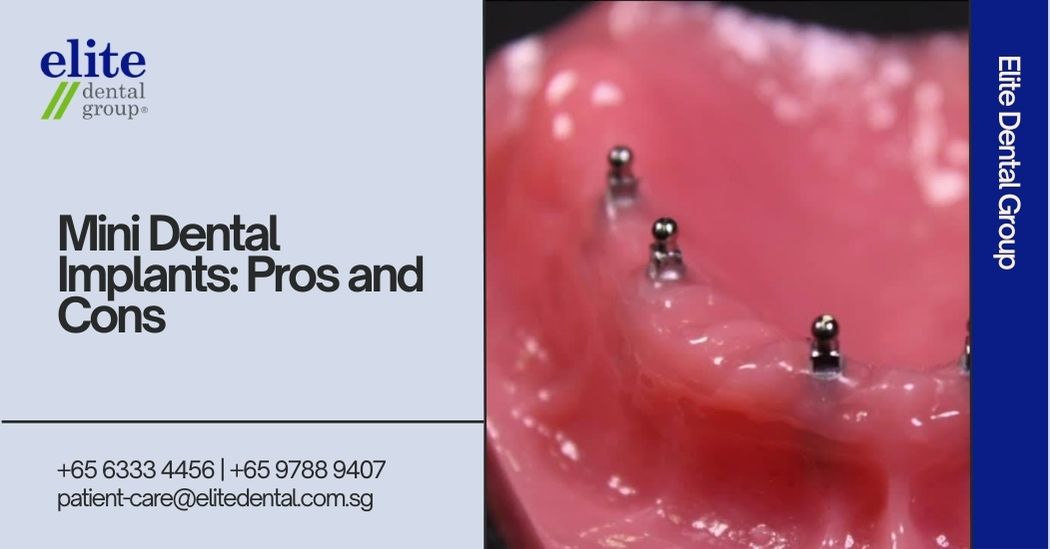
- Supporting a removable denture.
- Replacing very small lower front teeth in adults , where the stress of the bite is low.
- In certain orthodontic cases for anchorage, and only for a period before they are removed.
Mini dental implants should not be used to replace back molar teeth whereby the bite forces are high. This is because mini dental implants are too narrow and not structurally strong enough to withstand the stress of the bite in these areas.
If you are looking to replace your back molar teeth, I would strongly recommend that you get conventional dental implants done instead of mini dental implants.